Rust anti raid sky settlement builds give solo players a base raiders struggle to reach
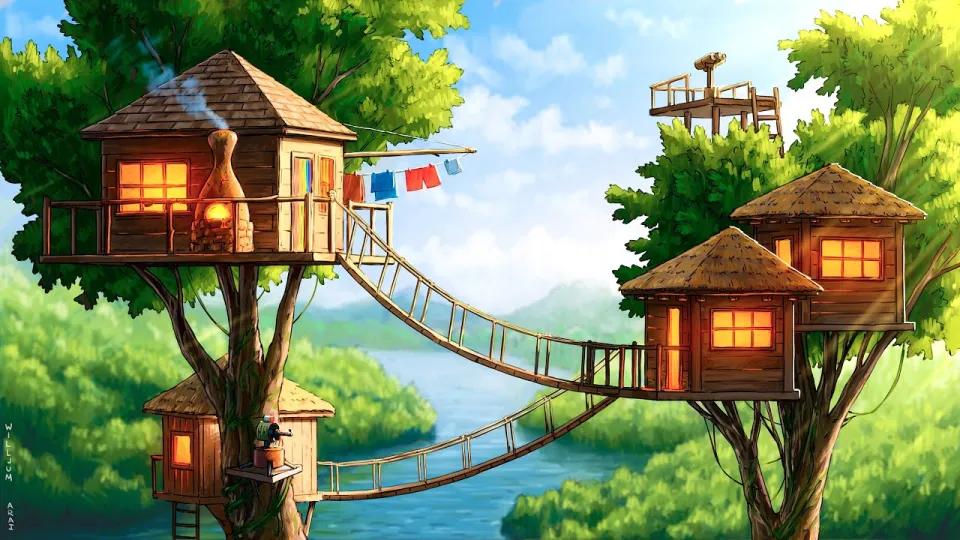
Video: I Built an anti raid sky settlement in Rust...
Want articles like this for your own video to promote it on YouTube and Google? Order them through the Telegram bot @sat_sit_bot. The bot writes and publishes the articles itself (with your YouTube video embedded) on popular topical websites (no ads). Your first 50 articles are free.
· based on the channel Willjum
A Rust anti raid sky settlement is a base placed high above the ground — on a tower, a cliff ledge or stacked foundations — so that raiders have to spend extra explosives and time just to reach the first loot room. The idea is simple: the higher the base, the more rockets, C4 and patience a raid costs, and the more likely a raider picks an easier target instead. Willjum's build video on this concept is the reference point here, and viewers who want the full survival series can support it through Willjum's Patreon page, where the channel posts bonus content and behind-the-scenes material.
What an anti raid sky settlement actually is in Rust
A sky settlement is not a single base but a cluster: several small, cheap structures stacked or spread at height, each holding a slice of the loot. In Rust the practical version looks like a tall tower with a jump-up entrance, a living floor, and two or three satellite boxes on nearby rocks or ledges that hold backup kits. Because raiders must breach from below, every floor adds a full wall or ceiling to the explosive bill, and because the loot is split, taking one box rarely ends the wipe for the defender.
The trade-off is upkeep. Rust charges a daily material cost for every building block and deployable, and a tall multi-structure base multiplies that cost fast. On a vanilla solo server a three-floor tower plus two satellites can run well past what one player farms in a session, which is why the format is usually paired with a monthly wipe, a low-population server or a 1.5x–2x gather rate.
The core building rules that make a sky base expensive to raid
Height is only useful if it is combined with the right materials and geometry. These are the rules that do the actual work:
- Use sheet metal or armored for the loot floors. Stone stops splash damage but falls quickly to C4; metal and armored ceilings force raiders to commit explosives per layer.
- Never put the tool cupboard on the ground floor. A ground-level TC is the first thing a raider looks for. Place it on an upper floor behind an armored door, and keep a second hidden stash of materials elsewhere.
- Build the entrance as a jump-up or a ladder hatch with a double door. A straight staircase is a gift; a jump-up costs the raider time and makes noise.
- Split loot across satellites. Two small boxes on separate foundations mean a raider who blows the main tower still leaves you a kit, a workbench and a furnace.
- Keep the footprint small. A 2x2 tower with three floors is cheaper to upkeep and harder to splash than a wide compound, and it fits on cliffs where raiders cannot place ladders easily.
How raiders approach a sky base and where the build fails
Raiders do not usually climb a sky base — they go through it. The standard route is a raid tower built next to the target, then horizontal rockets into the top floor, which is often the least protected because builders assume height equals safety. That is the single most common failure point: a soft top floor with the best loot inside.
A second failure is predictable symmetry. If every floor looks identical, a raider who has seen one sky base knows exactly where the TC and the loot rooms sit. Offset the TC, put the main loot behind a false wall, and keep at least one box in a structure that looks like decoration. Finally, watch the noise: a sky base with a generator, a large furnace and a turret running is loud, and sound carries further than most solo players expect on a quiet server.
Upkeep math for solo players before committing to a sky build
Upkeep is the reason most sky settlements die of neglect rather than rockets. Before placing the first foundation, work out the daily cost of the finished design, not the starting one, because every upgrade and every deployable adds to the bill. A practical approach:
- Build the tower in stone first, confirm the layout works, then upgrade only the loot floors to metal.
- Count deployables: each furnace, workbench, box and turret adds upkeep, and turrets in particular are expensive to keep fed and powered.
- Keep a separate farm base near a monument with a small stash so the sky settlement does not need to hold everything.
- On monthly wipes, the upkeep window is long enough that a solo player can build slowly; on weekly wipes a sky base rarely pays for itself.
Questions viewers keep asking about sky bases
Most of the doubt around this build style comes from people who watch Rust content without playing it, and from solo players who tried a tower once and lost it. The recurring themes are upkeep cost, whether height really stops raiders, and whether the format works on high-population servers.
The honest answers: height slows raiders rather than stopping them, upkeep is the real constraint, and on a packed vanilla server a sky base is a magnet for exactly the groups you cannot fight. It works best as one part of a wider setup — a main base, satellites, and a farm route — rather than as a lone fortress. Willjum's videos make the same point in practice: the settlement survives because the player keeps moving, farms constantly and treats each structure as expendable.
Useful links
- Willjum on Patreon — bonus content and support for the channel
- Willjum on Twitch — live survival streams
- Willjum on Twitter — updates and announcements
- Creative Commons Attribution 4.0 — license used for part of the music in the video
The verdict on building high in Rust
An anti raid sky settlement is a cost-shifting trick: it moves the expense of a raid from the defender to the attacker, and it works as long as the defender can pay upkeep and keep the loot split. It is not a shield — a determined group with a raid tower and enough rockets will still get in — but it changes the economics enough that most raiders look for a cheaper door. Willjum's build video is a good demonstration of the concept in a solo survival context, and the channel's weekly format makes it easy to follow how the base holds up over a wipe. If the series is useful to you, the Patreon page is where the channel's extra content lives.
Key takeaways
- A sky settlement in Rust is a base built high above ground on a tower, cliff ledge or stacked foundations so raiders must spend extra explosives just to reach the loot.
- Willjum's anti raid sky settlement video went live on 10 October 2026 and the channel passed 2 million subscribers around the same upload.
- The main build starts at roughly 4:20 in the video; the intro before it is a subscriber milestone thank-you.
- Raiding a sky base costs more rockets and C4 per wall because raiders must first climb, then breach vertically through several floors.
- Solo and duo players get the most value from sky builds on monthly or low-population servers where upkeep is affordable.
Source: I Built an anti raid sky settlement in Rust... · Markdown version
Questions & answers
Does a sky base actually stop raiders in Rust?
It does not stop them, it taxes them. Raiders must build a raid tower or climb, then blow through several floors instead of one wall, which adds rockets and time to every attempt. On a busy server that extra cost is often enough for a group to pick a ground base instead.
How much upkeep does a sky settlement cost per day?
It depends on size and materials, but a three-floor metal tower with two satellite boxes and a few deployables can easily exceed what a solo player farms in one session on vanilla rates. That is why the build is usually run on monthly wipes or 1.5x–2x gather servers, where the daily bill stays manageable.
Is a sky base better for solos or for groups?
Solos get the most benefit, because the whole point is making a raid unprofitable rather than winning a fight. Groups already have the numbers to defend a ground compound, and they usually prefer space for vehicles, furnaces and storage over height.
Why do people watch Rust videos without playing the game?
The survival format works as a story: a wipe has a beginning, setbacks and a finish, and creators like Willjum narrate it calmly rather than shouting through every fight. Many viewers treat a weekly upload as a routine, which is why the channel's audience grew well beyond actual Rust players.