What Should You Know Before Buying Wardogs?
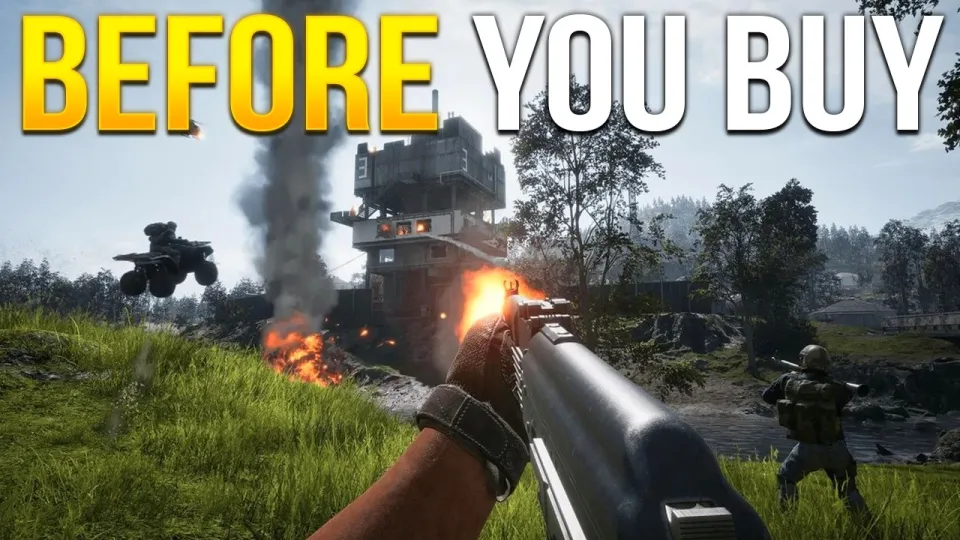
Video: Wardogs: EVERYTHING You Need to Know Before You Buy!
Want articles like this for your own video to promote it on YouTube and Google? Order them through the Telegram bot @sat_sit_bot. The bot writes and publishes the articles itself (with your YouTube video embedded) on popular topical websites (no ads). Your first 50 articles are free.
· based on the channel Fallout Plays
Wardogs is a large-scale online first-person shooter that puts server browsers, in-match money and deliberate, Arma-adjacent pacing ahead of automated matchmaking. If you want fast, symmetrical arena matches, it is probably not for you; if you want persistent-feeling battles where logistics, vehicles and squad communication matter, it is worth a look. You can follow the creator's channel and community through the Fallout Plays subscription link before diving in.
What kind of shooter is Wardogs, exactly?
Wardogs is best described as an arcade-leaning military sandbox that borrows the scale and slower tempo of Arma and mixes it with the readability and HUD conventions of Battlefield. Matches are fought over wide maps with vehicles, capture points and multiple roles, and the moment-to-moment gunplay is more forgiving than a full milsim. The result is a game where positioning, transport and team coordination often decide fights before the shooting starts. Players coming from PlanetSide 2 or Hell Let Loose tend to recognize the rhythm quickly: long approaches, short bursts of violence, then a regroup. It is not a hero shooter and it does not hand out instant respawn action; the downtime is part of the design.
How the server browser and matchmaking actually work
There is no traditional automated matchmaking funnel; you pick a server from a browser list, the way PC shooters did in the 1990s and early 2000s. That single decision changes a lot about the experience. You can choose by player count, ping, map rotation or community reputation, and you can return to the same server and recognize the same regulars. The trade-off is that you have to do a little work: check populations before you commit, and expect some servers to be quiet at off-peak hours. For players who miss the community feel of older shooters, this is the headline feature rather than a compromise.
The money system and what it changes
Wardogs runs an in-match economy: you earn currency through play and spend it on vehicles, equipment and support options rather than unlocking everything permanently. This creates a soft risk-reward loop, because expensive hardware is a commitment and losing it hurts. Practically, it means:
- Start matches with cheap, reliable kits until you learn the map flow.
- Bank currency before buying armor or aircraft, since a single bad push can wipe the investment.
- Coordinate purchases with your squad so the team is not fielding four of the same vehicle.
- Treat support tools and transport as force multipliers, not filler.
That economy is also why the game feels slower than a Battlefield match. Spending decisions reward patience over constant aggression.
Vehicles, driving and control options
Vehicles are central, and transport duty is a legitimate role rather than a punishment. Driving between objectives is calm, almost relaxing, and it gives you time to read the map and plan the next fight. Input flexibility is unusually good: switching between controller and keyboard plus mouse works without friction, and push-to-talk keeps functioning while a controller is connected. If you prefer a gamepad for flying or driving and a mouse for infantry combat, Wardogs accommodates that without forcing a restart or a settings trip. Bear in mind that some actions are still faster on mouse and keyboard, so expect a small learning curve whichever scheme you favor.
Is Wardogs playable solo, and how hard is it to find a fight?
Solo play works, but it is a different game. You can join a server alone, grab a rifle and contribute, yet the design clearly assumes squad play: voice communication, shared transport and coordinated pushes. Players who enjoy hanging out, hauling supplies and talking to strangers often get more out of it than pure kill-chasers. Expect quiet stretches. If your ideal session is nonstop close-quarters action from the first second, the pacing will frustrate you; if you like the build-up, the quiet stretches make the firefights land harder. Joining an active squad early in a session is the fastest way to skip the wandering phase.
Common doubts from early players
The most frequent concerns raised by people watching pre-release footage cluster around four themes. First, comparisons: is this just Arma with a Battlefield HUD, or a PlanetSide successor? The honest answer is that it borrows from both but is its own thing, with a stronger economy layer than either. Second, teamwork: early servers reportedly show genuine cooperation, though that depends heavily on which community you join. Third, side-switching and queueing with friends, which is a real friction point when server populations are uneven; players want to move to a friend's team when space opens rather than refreshing a list. Fourth, performance and longevity, which are normal unknowns for any online-only launch. None of these are dealbreakers, but they are the questions worth asking before you spend money.
All the links from the breakdown
- Fallout Plays subscription link
- Fallout Plays on Patreon
- Shure SM7B microphone
- Blue boom arm
- Elgato Key Light
Verdict: who should buy Wardogs and who should wait
Wardogs suits players who value server communities, vehicle play and a slower tactical tempo over instant matchmaking. If you liked the idea of PlanetSide 2 or Hell Let Loose but wanted a more readable HUD and a money-driven loadout layer, this is aimed squarely at you. Buy it now if you have a group to play with or enjoy meeting strangers on voice chat; wait for a sale or more population data if you only play solo and demand constant action. The full breakdown on the Fallout Plays channel walks through these systems in motion, and subscribing through the Fallout Plays link is the simplest way to keep up with follow-up guides and streams.
Key takeaways
- Wardogs is a large-scale online FPS built around server browsers rather than automated matchmaking, reviving a 1990s and early-2000s style of community play.
- Its pacing sits between Arma and Battlefield: slower, more deliberate movement with a readable Battlefield-style HUD.
- The game runs an in-match money and economy system that shapes what vehicles, gear and support options you can bring.
- Controller and keyboard-plus-mouse input can be switched on the fly, with push-to-talk working while a controller is connected.
- Solo play is viable, but the game rewards players who join squads, use voice comms and accept downtime between firefights.
Source: Wardogs: EVERYTHING You Need to Know Before You Buy! · Markdown version
Questions & answers
Is Wardogs more like Arma or Battlefield?
It sits between the two. Movement, map scale and vehicle handling lean toward Arma, while the HUD, capture flow and readability are closer to Battlefield. The in-match money system is the element that belongs to neither and gives Wardogs its own identity.
Can I play Wardogs solo without a squad?
Yes, you can join a server alone and still contribute, but the game is designed around squad communication and shared transport. Solo sessions often involve quieter stretches, so joining an active squad early is the fastest way to find fights.
Does Wardogs support controllers on PC?
Controller and keyboard plus mouse input can be switched seamlessly, including push-to-talk working while a controller is connected. Some actions remain quicker with a mouse, so expect a short adjustment period.
Do I need to use a server browser to find matches?
Yes, Wardogs uses a server list rather than automated matchmaking. You choose by population, ping and map rotation, which restores community regulars but requires you to check server activity before committing to a session.