Rust, How a Solo Player Survived in an Ancient Fortified God Rock Base on a 1000-Player Server
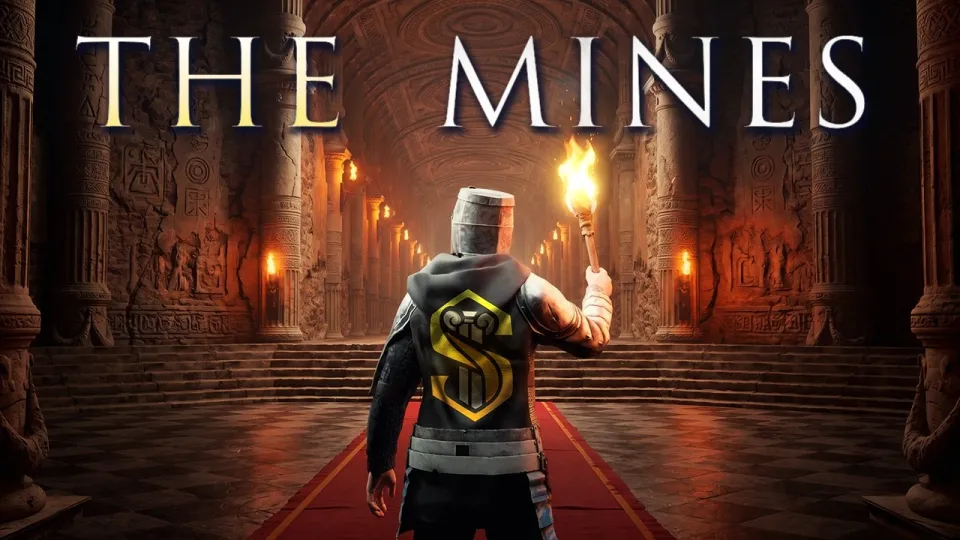
Video: I Survived in an ANCIENT FORTIFIED god rock base in Rust..
Want articles like this for your own video to promote it on YouTube and Google? Order them through the Telegram bot @sat_sit_bot. The bot writes and publishes the articles itself (with your YouTube video embedded) on popular topical websites (no ads). Your first 50 articles are free.
· based on the channel Solutize
A god rock base in Rust is a base built into or around a rock formation that cannot be destroyed by normal raiding tools, and surviving in one as a solo player means turning that unraidable core into a layered, low-profile fortress while avoiding the attention of a 1000-player server. In his solo wipe video published on 1 October 2026, Solutize builds one of the most ambitious solo god rock bases he has attempted, and the whole run is recorded live — you can watch those sessions as they happen on his Twitch channel, where the raw, unedited wipes are streamed.
What a god rock base actually is in Rust
A god rock base is a structure anchored to a rock formation whose geometry blocks or absorbs damage, so the core loot room sits inside terrain that raiders cannot break through. The player builds around the rock rather than on flat ground, using the stone as a free, indestructible wall.
The practical consequence is that raiders must go through the player-built shell instead: doors, walls, honeycomb and any turrets covering the approach. That is why god rock spots are contested early in a wipe and why finding one before other players do matters more than the base design itself.
Key properties of a good god rock spot:
- The rock must fully enclose at least one side of the core, so no wall is exposed to a straight-line raid.
- The terrain around it should limit sightlines, ideally in a forest, a valley or against a cliff.
- It needs a reasonable distance to a monument for scrap and components, but not so close that foot traffic passes constantly.
- The building volume must allow at least two layers of honeycomb between the outside and the loot room.
Surviving solo on a 1000-player server
On a server with around a thousand players, the biggest threat to a solo is not a organised clan raid but being noticed at all. Solutize's approach in this wipe is strategic rather than aggressive: pick a location, stay quiet, and let the population fight each other.
Solo survival on high-population Rust comes down to a few repeatable habits:
- Farm at off-peak hours and never run the same route twice in a row.
- Keep the outside of the base boring: no visible turrets until the core is finished, no decorative lighting, no obvious compound walls.
- Split loot across several small stashes and boxes instead of one large room.
- Use the rock itself as the primary defense and treat player-built walls as a delay, not a guarantee.
- Trade only when necessary and never reveal the base direction while carrying scrap.
A god rock base helps here because the unraidable part of the structure means the solo player does not need a massive, expensive shell to protect the most valuable items.
Building the ancient fortified look without wasting resources
The "ancient fortified" style in the video is not just cosmetic: stone walls, layered roofs and compact footprints make a base read as old and picked-over rather than fresh and worth raiding. On a crowded server, appearance is part of defense.
Practical priorities when building a fortified god rock base as a solo:
- Finish the tool cupboard and core loot room first, before any decoration.
- Upgrade the outer shell to stone or metal only after the honeycomb is complete, so raiders cannot see upgrade progress from outside.
- Place turrets inside the shell covering doorways, not on the roof where they advertise the base.
- Use shotgun traps and flame turrets on tight interior angles where a raider must slow down.
- Keep a small secondary stash base a few grids away with backup kits and resources.
A common mistake is overbuilding early: a large, half-finished stone shell with no honeycomb is easier to raid than a small finished core inside a rock.
Raid defense and what actually stops raiders
Raid defense for a solo god rock base is mostly about making the raid expensive and slow, not about winning a firefight. Raiders on a high-population server usually bring explosives in fixed quantities, so every extra layer and every turret angle costs them time and material.
What matters most, in order:
- Honeycomb depth between the outside wall and the core, ideally two or more layers.
- Door stacking: multiple doors in series, each requiring separate explosives.
- Interior turrets that cover the exact spot where a raider breaches, so the first hole becomes a kill zone.
- Not storing all explosives, scrap and high-tier loot in the same room.
- Keeping the base small enough that raiders cannot tell from outside how deep the core sits.
The god rock itself removes one entire attack vector, which is why the strategy remains one of the strongest solo options in Rust even on servers with a thousand players.
Common questions from viewers of the solo wipe
Viewers watching solo wipes tend to ask the same things: whether solo play is viable on huge servers, whether god rock spots are worth contesting, and how much of the run is luck versus planning. The honest answer is that solo Rust on a 1000-player server is viable but slow — progress comes from consistent, low-risk farming and from never giving another player a reason to remember your name.
God rock spots are worth taking when you find one early and can build the core the same day; if the spot is already surrounded by neighbours, the rock stops being an advantage and becomes a landmark that helps raiders find you. Planning matters more than luck in the sense that a solo player who chooses the location, timing and base size deliberately will outlast one who simply builds wherever they spawn.
All links from the video
- Live streams of full wipes: https://www.twitch.tv/solutized
- Community Discord: https://discord.gg/57vX6Yvga6
- Second Discord invite listed in the description: https://discord.gg/F9kEQWZjnd
Conclusion
A solo god rock base in Rust works because it removes the one thing a solo player cannot afford to gamble on: the outer wall. Solutize's 1000-player solo wipe shows the trade-off clearly — slow, quiet progress and a compact fortified core beat a big, visible base every time. The channel Solutize is worth following if you want full narrated wipes rather than clips, and the solo format is exactly what the creator is asking viewers about for future videos. If you want to see the decisions made in real time instead of in an edited cut, catch the next wipe live on Solutize's Twitch stream.
Key takeaways
- Solutize's solo wipe video was published on 1 October 2026 and centres on one of the most ambitious solo god rock bases he has built.
- The wipe took place on a server with roughly 1000 players, which forces a solo player into stealth, timing and base placement decisions.
- A god rock base uses an unraidable or near-unraidable rock formation as the core of the structure, with honeycomb and turrets around it.
- Solo survival on a high-population Rust server depends more on not being found than on winning open fights.
- The video is a full narrated solo wipe, not a highlight reel, and the creator has asked viewers whether they want more solo content.
Source: I Survived in an ANCIENT FORTIFIED god rock base in Rust.. · Markdown version
Questions & answers
Is a god rock base actually unraidable in Rust?
No base in Rust is truly unraidable. A god rock base uses terrain to block one or more attack directions, so raiders must go through the player-built shell instead of the rock. That makes the raid far more expensive, but a determined group with enough explosives can still reach the core through doors and honeycomb.
Can a solo player survive on a 1000-player Rust server?
Yes, but the playstyle has to change. Solo survival on a high-population server depends on low-profile base placement, farming at quiet hours, splitting loot and avoiding unnecessary fights. A god rock base helps because the core is protected by terrain, so the solo player needs less honeycomb and fewer turrets.
How deep should honeycomb be on a solo god rock base?
Two layers of honeycomb between the outside and the loot room is a reasonable minimum for a solo base, with more on the side that is easiest to approach. Depth matters more than material tier, because every extra layer forces raiders to spend more explosives before they reach anything valuable.
Where can I watch the full solo wipe instead of highlights?
The full sessions are streamed live on Twitch at https://www.twitch.tv/solutized, and the edited wipe is published on the Solutize YouTube channel. The Discord at https://discord.gg/57X6Yvga6 is where the community discusses wipes and base spots between videos.